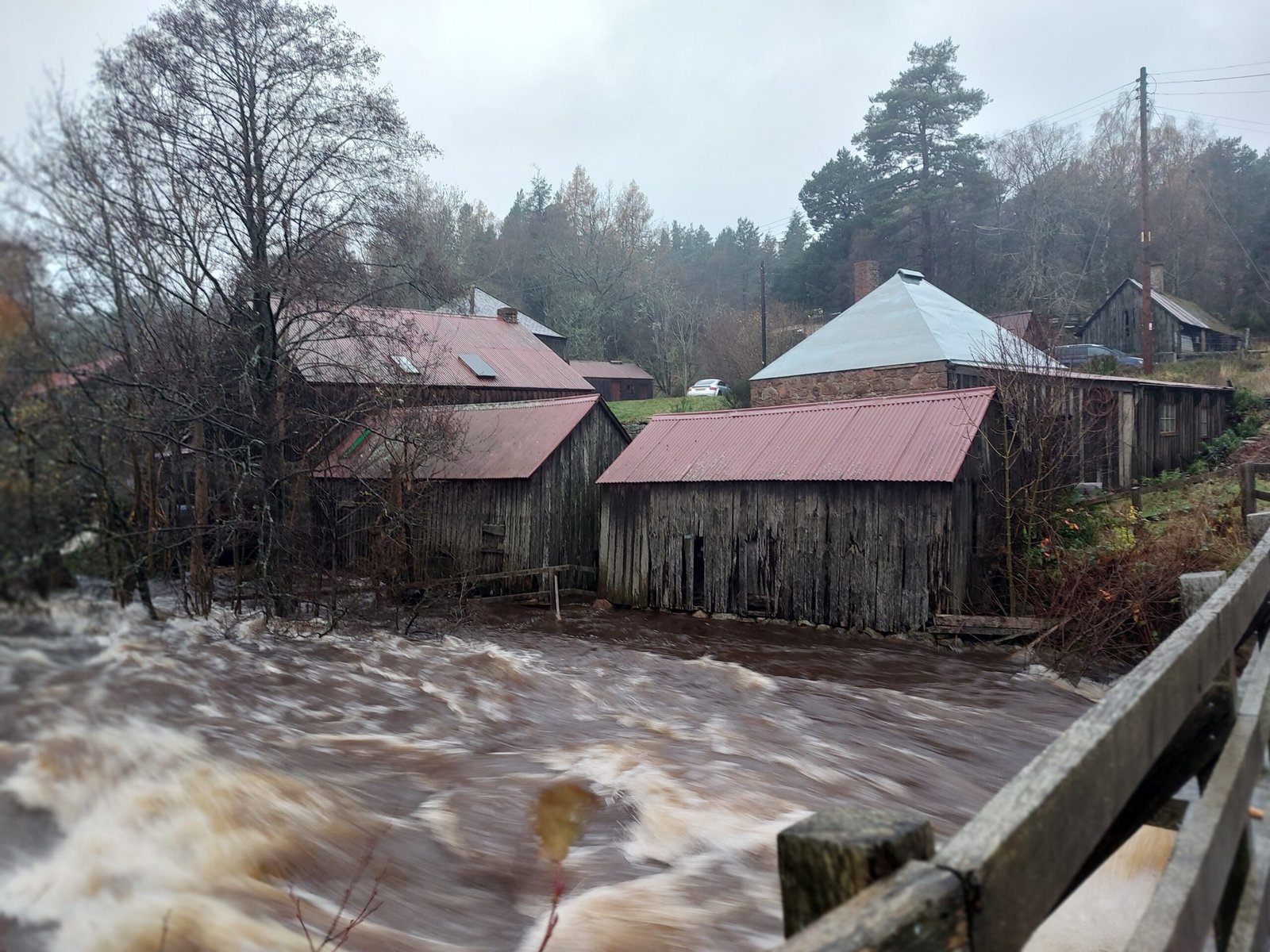

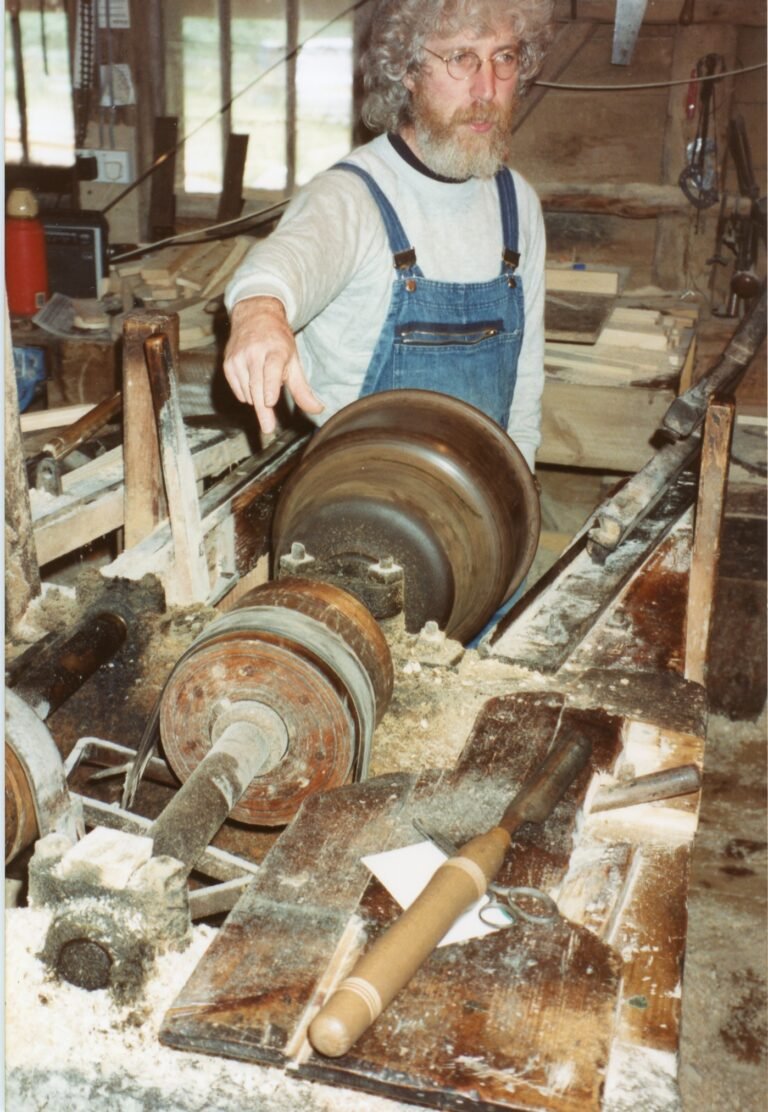
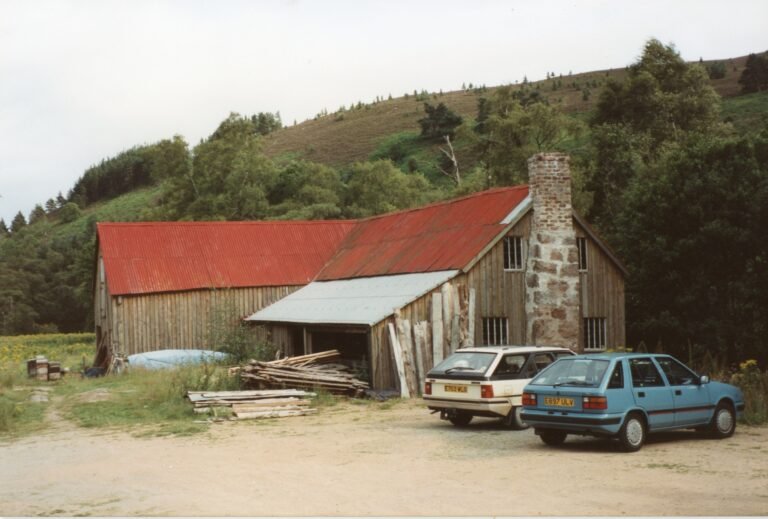
The Bucket Mill is a water powered mill, on the Water of Feugh in Finzean, Aberdeenshire. It houses specialist equipment to produce its namesake product: turned wooden buckets. The manufacture of these bucket combines the wood turners’ and coopers’ trades. The Bucket Mill is one of three surviving water powered wood mills in Finzean, with another Sawmill and a Turning Mill a mile downstream. They are all A-listed, in recognition of their local and national significance.
The Sawmill dates to the 1820s and represents the historic exploitation of the Glen Ferrick pinewoods and Finzean Estate plantations by various contractors, who used the mills to process timber to transport material to market. The Turning Mill dates to the 1830s. They are insignificant insofar as they represent common machines of the time, but their survival into the 21st Century, and as an intact trio of mills with a largely unbroken operating history, sets them apart from other historical and preserved examples.
The Bucket Mill site was first known as the ‘upper sawmill’, this being cleared by a roup (a farm auction) in 1846 after the pinewoods had been exhausted. This earlier mill wore a shingled roof and was dismantled and transported to Aberdeen. In 1853 Peter Brown took over the site, eventually establishing the Pail Mill (as it was first known) on this site, manufacturing a variety of buckets, pails and tubs from predominantly Scots Pine for domestic, agricultural and maritime markets.
Peter Brown came from a long lineage of millers, three generations of his family had been meal millers at the Mill of Cranna near Ballochan. As a young man he would have been no stranger to mills and their workings and was recorded in the 1851 census as a Millwright. One of the machines found in the mill is understood to be a unique invention of his: “and there in a corner stood a remarkable memorial to [Peter Brown’s] inventive genius. A combined guillotine and drilling machine cleverly conceived, and particularly suited to the task of “banding”. It was with amazement that I learned that the original had been a working model constructed completely of wood by the designer” (Gerald Mitchell, 1961).
Over time the name of Pail Mill has slipped out of use. Graffiti in the mill dating to 1892 and 1915 records the name of Pail Mill, but somewhere in time this passed our of parlance. The Bucket Mill has always been the name recorded on historical Ordnance Survey maps. Another record, from St.Drostan’s Church in Glenesk lists it as a ‘Cooper Mill’ in 1860 and 1871.
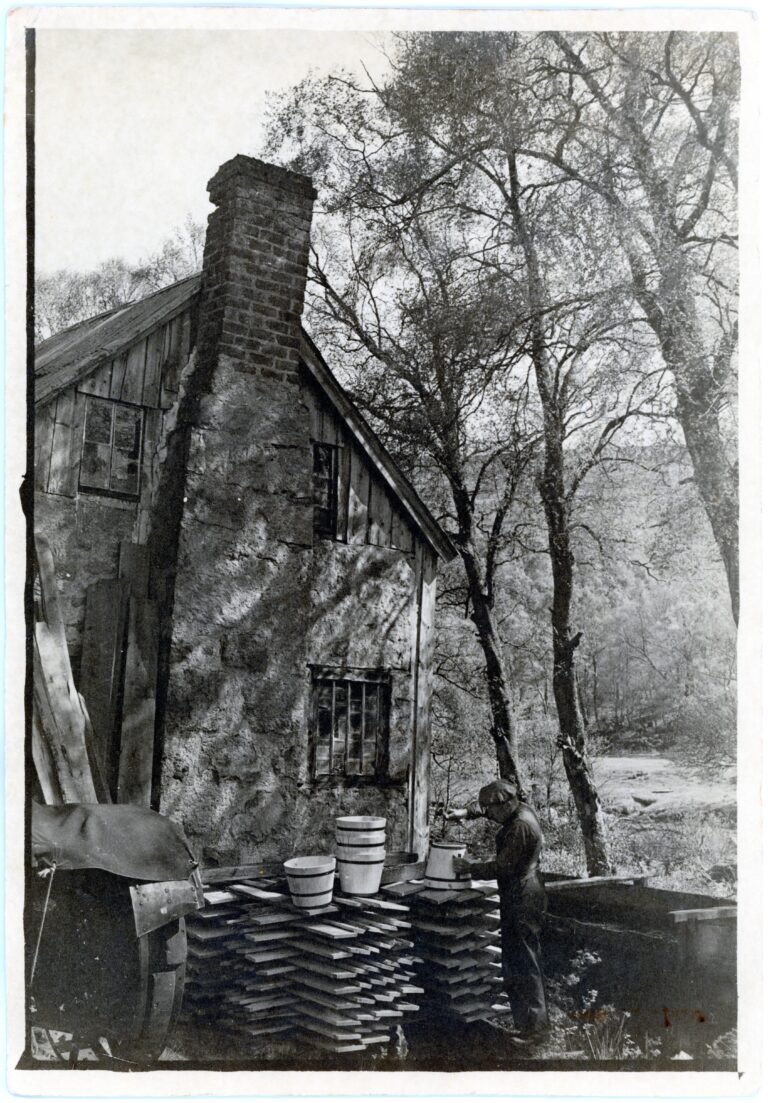
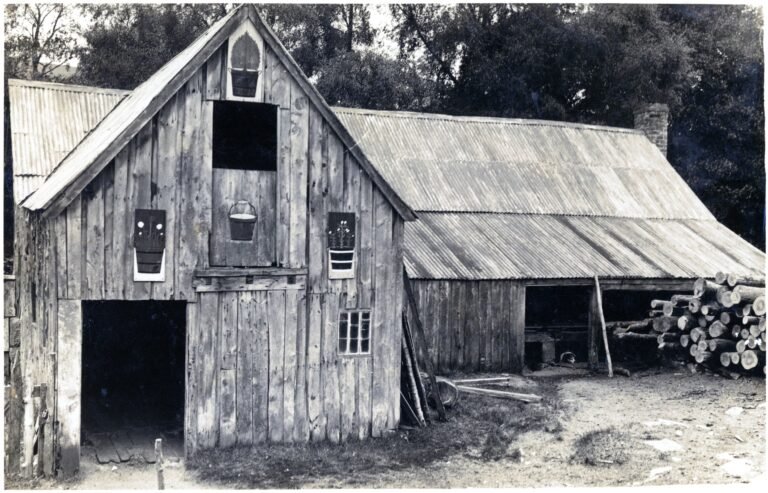
It is believed the mill began to operate in earnest from 1st December 1859, this being a date charcoaled into a joist above the entrance, which correlates with an interview with William Brown, the last of the Brown millers, that the machinery was “laid down about the year 1858”. (Mitchell, 1961). When first built, the Bucket Mill had a timber roof, a small section of this remains intact in the attic to this day.
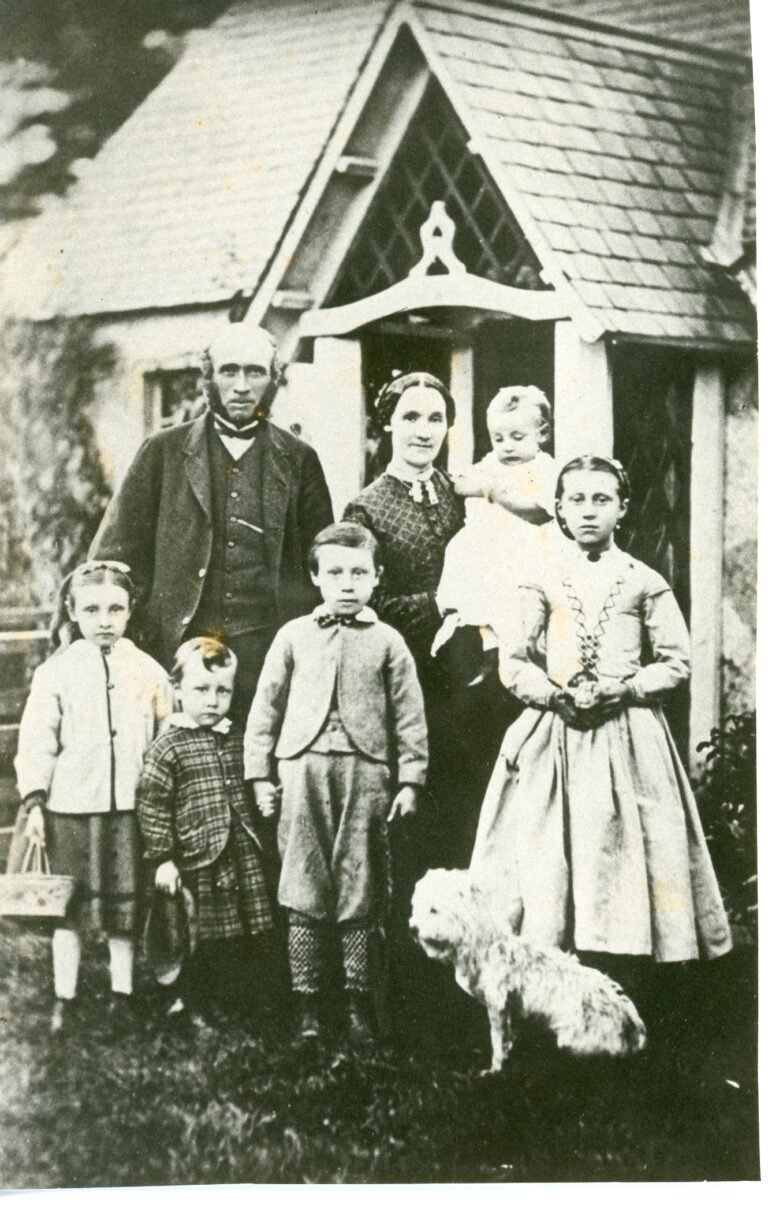
Alongside developing the Bucket Mill, a cottage was built opposite, which is photographed in the only known photograph of Peter Brown taken around 1880 – 1885, this image also captures an older, lower roof on the cottage which appears to be shingled. The stone lintel above the front door is inscribed “P.B. 1855”. Alongside developing the mill and this house, Peter Brown also cultivated three fields, known as the Bucket Mill croft, which provided fodder for his horse and potatoes and vegetables for his growing family.
It appears the Browns originated from Glenesk and Peter Brown would regularly walk the distance to the Episcopal church there, St.Drostan’s, on Sundays. His five children (Marry Anne Simpson b.1856, Elizabeth b.1858, Charles Alexander b.1860, Margaret b.1862 & George Henry b.1865) are recorded as being baptised there. Peter and his wife Elizabeth (nee Robertson) clearly had a hard life, with three of their five children dying in infancy. Elizabeth passed shortly after the Bucket Mill began operating in April 1860 and two of his children, Mary Anne and George Henry died within a week of each other in February 1871. It is thought Peter Brown died in 1904, with a stone fountain being erected along the Forest of Birse road in his memory.
Charles Alexander (b.20th April 1860) succeeded his father to became the second miller. One of Alexander’s contributions was the digging out of an oxbow lake upstream of the mill, which was dammed and fitted with a sluice gate to give extra water when the river was low. It was during his tenure that the Press and Journal noted that same streak of family invention in 1904, describing the mill being a “repository of mechanical genius”.
Alexander was in turn succeeded on his death by his son William Brown in 1940. The rise in the manufacture of mass-produced galvanised zinc buckets grew in the latter half of the 19th century which reduced demand for wooden pails in domestic markets, although wooden buckets were still favoured in agriculture, particularly for use with horses, but this too reduced with the use of horses for motive power. The Second World War brought contracts for the RAF and Royal Navy, there being a preference for wooden buckets in explosives stores and magazines. The miller’s trade was exempt from military service.
Post-war, the arrival of the plastic bucket brought further decline in demand for wooden buckets. William Brown’s main trade turned to producing tubs for planters. A Mr. J Reid, noted in 1960 that William Brown’s “Ornamental flower tubs are still in good demand”. There was also a market for wooden buckets of alder for the tanning trade in the West of Scotland: “The stout alder wood buckets “stood up” to certain chemicals and technical dyes where metal would in all probability corrode in a short space of time.” (Mitchell, 1961).
In the last years of operation, the Bucket Mill was mainly run by a tractor via a drive belt as the lade and wheel fell into disrepair. Whilst the grid came in the 1950s, a connection was not made to the Bucket Mill until the 1980s as it had a dynamo to bring light to the mill and house, although by the time of William Brown’s death, this no longer functioned.
With the passing of William in 1974, the mill sat idle for several years, reaching a critical state of degradation, the stone ‘lum’ leaning significantly towards the Feugh. Bruce Walker and Sandy Fenton of the National Museum of Antiquities (now National Museum of Scotland) visited the mill around this time and succeeded in having the mill listed as an Ancient Scheduled Monument to secure some protection. They undertook extensive surveys of the mill; the drawings of this survey work are an invaluable and beautiful resource. Both would go onto be founding members of the embryonic Finzean Water Mills Trust.
In 1976 the contents of the Bucket Mill were purchased from Alice Brown by the National Museum of Antiquities, safeguarding the collection of removable tools and equipment still inside the mill, with a hope that the mill itself might be relocated to the Royal Highland Showground in Ingleston, as an open-air museum exhibit.
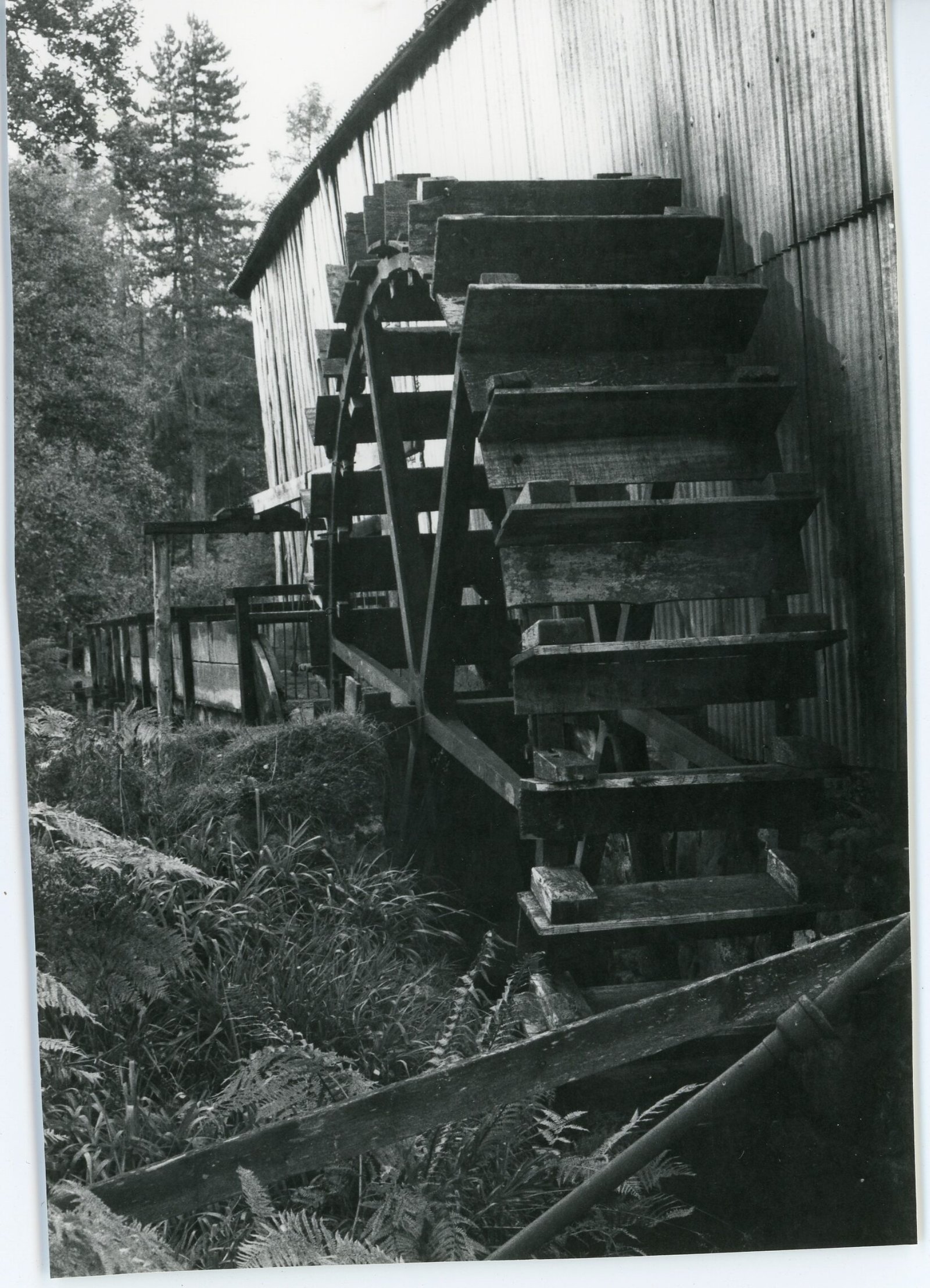
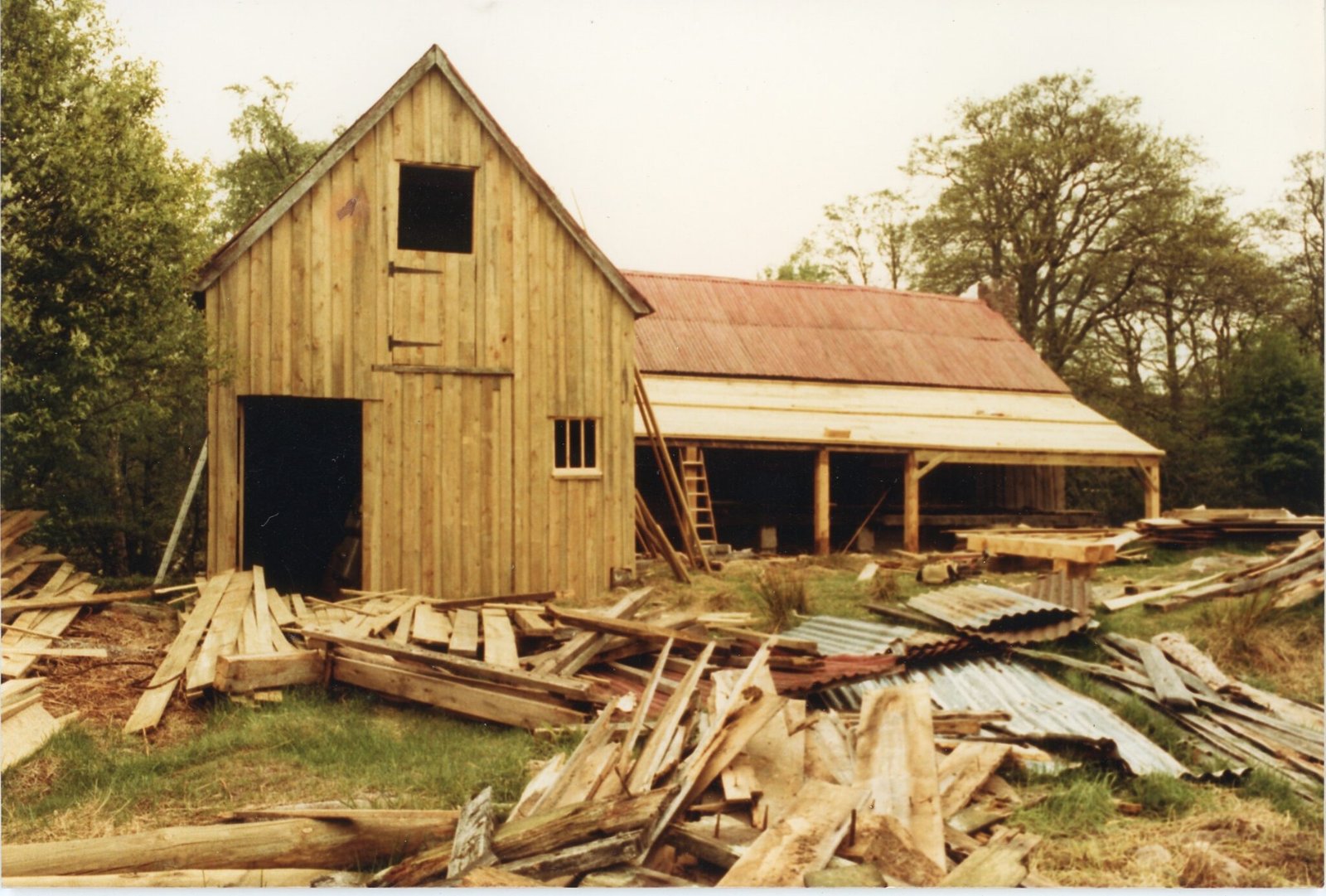
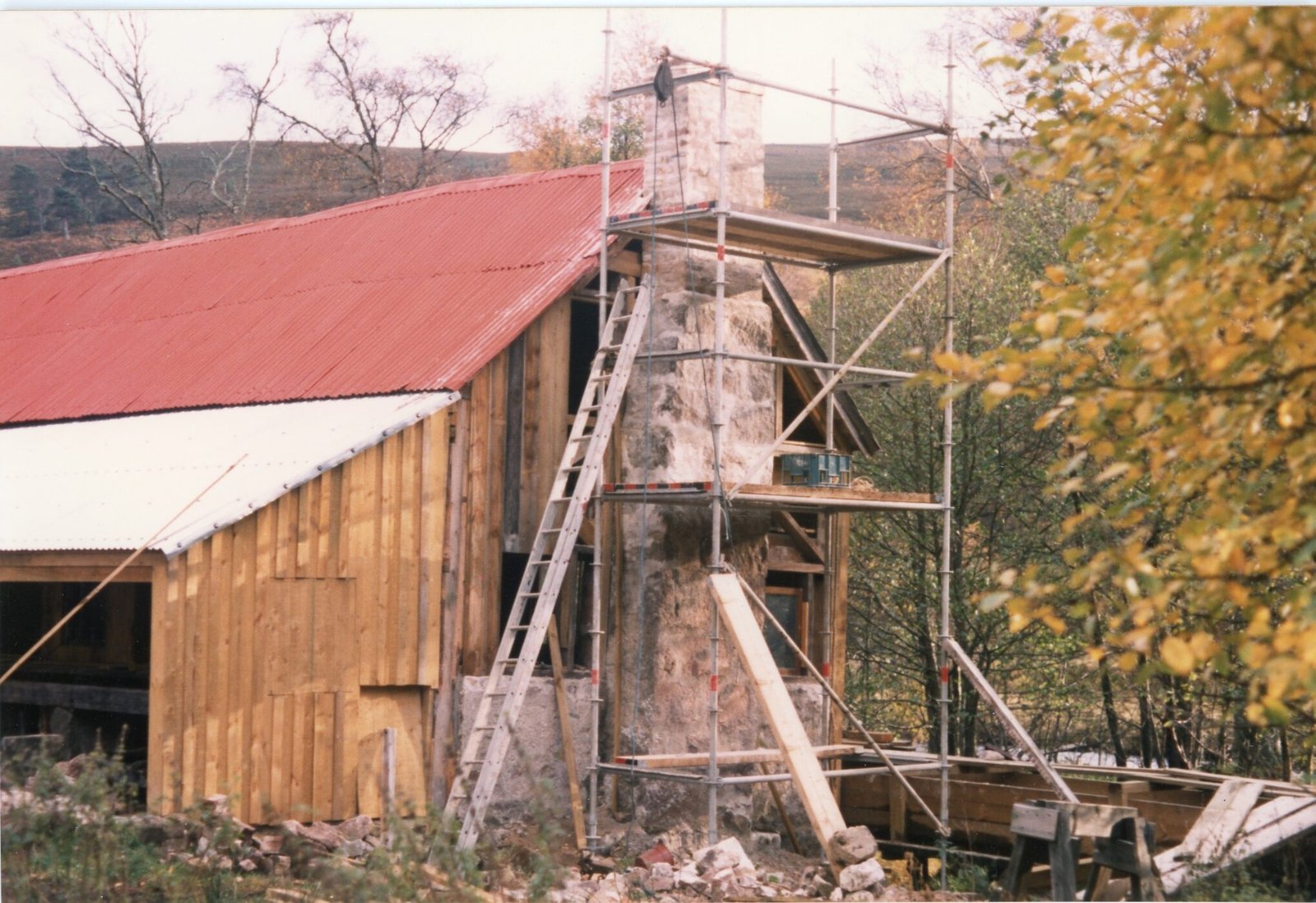
A local initiative involving the Finzean Estate, Sandy Fenton and Bruce Walker to revive the mill in the late 1970s led to the founding of the Finzean Water Mill Trust, with ownership of the Bucket Mill passing from the Finzean Estate to this Trust.
The next miller, Stan Moyes, lived locally and had met William Brown on several occasions. For a time, Stan worked with David Duncan, helping to operate and maintain the lower Sawmill and Turning Mill. With this experience, it was arranged with that he should take on the Bucket Mill and so Stan and his wife Liz moved into Bucket Mill Cottage in 1978, with the restoration of the Bucket Mill beginning in earnest around 1982. After extensive repairs, the mill opened to the public and Stan began producing wooden buckets once again around 1990. To enable this, many tools were loaned back from the Museum of Antiquities. Stan reestablished the Bucket Mill as an iconic local landmark over the next decades, welcoming hundreds if not thousands of visitors under his stewardship.
The Finzean Water Mill Trust was wound up in 1999 and ownership passed to the newly established Birse Community Trust (BCT), who are now custodians of all three wood mills in Finzean. Shortly after becoming custodians the BCT secured A-Grade listed status for all the Finzean Mills, the highest designation possible, in recognition of their importance.
The Finzean Mills enjoyed a renaissance in the early 2000s, with the BCT providing a market for buckets, turned goods from the Turning Mill and sawn timber from the Sawmill and a number of substantial repairs were made to keep the mills in good health. In 2002, the remaining items from the mill in the care of the Museum of Antiquties returned.
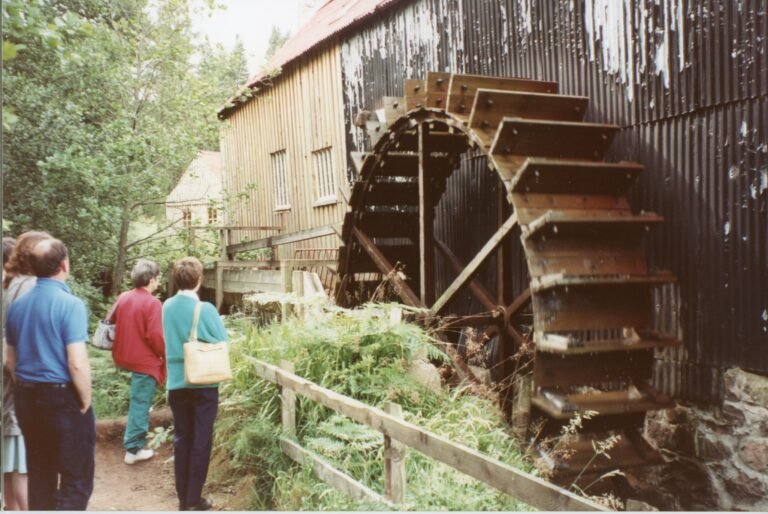
In the closing days of 2016, Storm Frank battered Aberdeenshire with heavy rains, causing intense spate flooding the like of which had not been seen for generations. This washed away both the Bucket Mill and the Sawmill’s weirs, rendering both mills inoperable. Repairs to the weirs were conducted in 2018, but the Bucket Mill’s weir and wooden lade suffered further damage during further intense flooding in the winter of 2021/22. It is thought the Bucket Mill last ran in 2020.
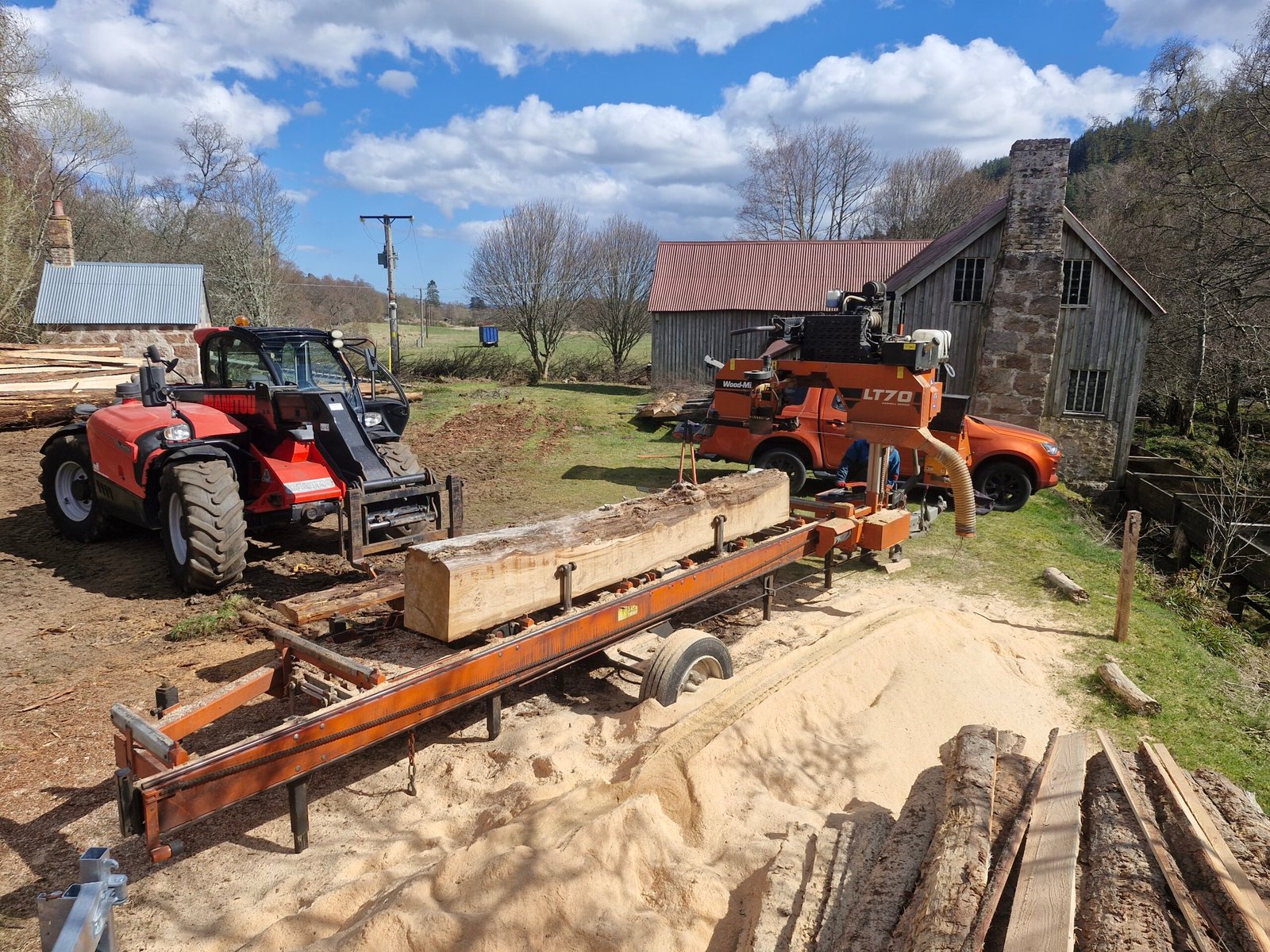
In November 2024 the Finzean Bucket Mill Community Interest Company (CIC) was formed to become the next custodian of the mill, with Heritage Crafts supporting Owen Bushell spending time with Stan Moyes the discuss the details and intricacies of the bucket making process and maintaining the mill. In October 2025 a 25-year lease was signed between the Bucket Mill CIC and the Birse Community Trust and the first timber for repairs was milled, via a mobile sawmill, in April 2026 to provide material for future repairs. Repairs to the weir began in August 2026 and included the provision of a fish ladder to support the migration of Salmon in the Feugh.