

Our primary goal is to return the Bucket Mill to working order and restart the production of wooden buckets using the historic machinery in the mill. We’ll use the process of repair to teach at-risk endangered ‘red list’ crafts like millwrighting. But to get to the point of making our first bucket will be a big challenge, we have huge civil and mechanical, technical and ecological challenges to overcome. We need to build a supply chain from the ground up.
Our project has eight key objectives:
- Restore the Finzean Bucket Mill
to working condition and maintain it in good order. This involves navigating necessary health and safety legislation and interventions and implementing safe systems of work to ensure compliant and safe operation.
- Protect the historic buildings
beyond undertaking conservation-standard repairs and maintenance, by developing fire detection and suppression measures, site-wide security enhancements and remote monitoring for river and lade levels.
- Manufacture wooden buckets and pails
and other woodcraft products, especially those connected to previous products made in the Finzean mills, such as block paving, roofing shingles and a large variety of turned products – all manufactured from locally sourced materials.
- Develop the local supply chain and revenue generating activities
through the milling and sale of local timbers, and by capitalizing on our skills and experience by offering specialist building contractor services to support the renovation and repair of other historic mills, especially the lower Finzean Sawmill and Turning Mill.
- Teach and disseminate skills relating to the endangered craft of Millwrighting
through effective means, such as apprenticeships, building craft training placements, craft courses and educative engagement activities in the community.
- Champion the Finzean Mills
and give a voice to this remarkable and intact collection of historic buildings and the Intangible Cultural Heritage embodied within them.
- Support other rural craft businesses
by building a resilient network in our locality and working to create and sustain an inter-dependent craft economy in the North-East of Scotland, using our platforms to nurture and support allied rural craft trades and procure services from such trades wherever possible.
- Build a resilient and sustainable organisation
with a good brand, fair working conditions for employees, directors and volunteers, always striving to get the best out of everyone with engaged staff, volunteers, stakeholders and partners, adhering to the Scottish Government ‘Fair Work First’ guidance.
Foundational Research
In 2024, Managing Director Owen Bushell travelled extensively across central Europe to explore the conditions which sustain, make or break rural craft businesses, using his own craft of shingle making to act as a constant in which to delve into the complex and nuanced topics which impact the creation, sustaining, passing on and education of heritage craft practices. This report highlighted many learning points and the key areas which impact craft businesses:
- Security of tenure
- Autonomy in operation
- Access to local natural materials
- Support for capital costs, such as tools, machines and equipment
- Support to navigate regulatory stipulations, such as health and safety or taxation.
Many of the observations and learning from this intense period of study have been fed directly into our project and led to the adoption of the social enterprise model to take forward a lease of the Bucket Mill.
Rural Optimism
One core value developed from this research is the principle of rural optimism which underpins our work:
A resilient network of cottage industries creates and sustains a supply chain which keeps and brings money in local circulation. It would be in our cultural memory to think of cottage industries as archaic, the industrialists will be quick to say they are inefficient. Yet as a model it can be immensely productive. Our monolithic modern industrial systems strip away the human touch, and with it, connection and meaning. A cottage industry model can be very reactive to local needs and in conversation with a local community, in a way in which a large corporation cannot.
The importance of sustaining the skills which come from traditional crafts is immensely important. This is not a glorified, whimsical or romantic lifestyle. In such skill lies a whole technology system which is highly sustainable, is local in nature, has a low or even negative carbon footprint and is very harmonious if not beneficial to nature. Traditional craft businesses related to architecture and the building trades underpin the maintenance and repair of all the historic buildings we have in the UK. Without them, there would be no castles, stately homes, cathedrals, windmills or Tudor timber frames.
Supporting Rural Craft Businesses: A Study of European Shingle Makers – Bushell, 2025
Rejuvenating Historic Buildings with Craft Trades
At the point we begin our story with the Finzean Bucket Mill CIC, all of the Finzean mills stand at a critical juncture. Both the knowledge associated with operating and maintaining them, and the buildings themselves, are at risk of immediate terminal decline. What makes these mills so significant is that they were all fully operable within the past decade and have run almost continuously since their construction. The lower Sawmill dates to the 1820s, the Turning Mill to the 1830s and the Bucket Mill to 1853. They are not the earliest sawmills either, with records showing there was an earlier sawmill at the Bucket Mill.
Spate flooding in 2016 caused extensive damage to all these mills, with repairs made in 2018, but the Bucket Mill suffered further damage from flooding in 2021/22, washing away its weir for the second time. This, combined with a visit from the Health and Safety Executive in 2022, effectively condemned operation of the mills in their current condition. This has risked being the death-nail in an otherwise unbroken history of operation.
Extensive reflection, research and application of the findings of the Churchill Fellowship report led us to establish a ‘Community Interest Company’ (CIC) in November 2024 with patient development culminating in the signing of a 25-year lease with the Birse Community Trust in October 2025.
Secure Tenure, Secure Future
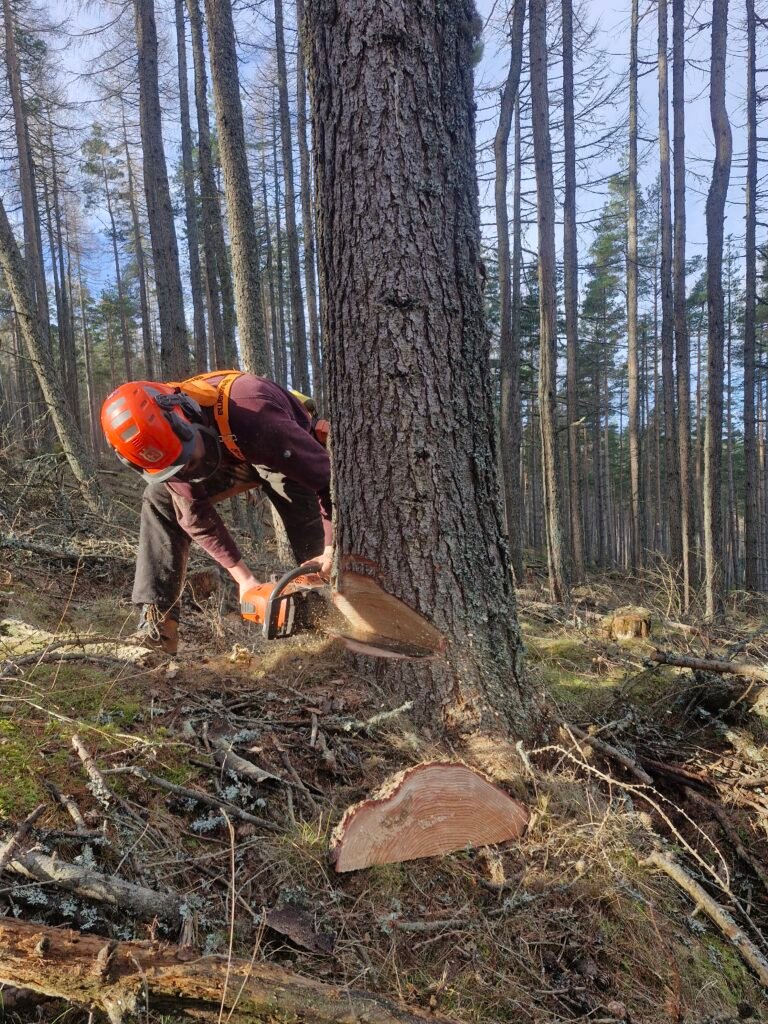
The stoic support of the Birse Community Trust in granting our long-term lease, for an annual peppercorn rent, is one of the most significant, underpinning factors which will enable our organisation to steadily grow and succeed in the coming years, delivering wide ranging benefits from the upkeep of historic buildings through to creating rural employment. The length of this lease enables us to make a sensible plan of action upon which we can build year-upon-year, without threat of eviction, so long as we live up to our reasonable lease terms.
We have become accustomed to, and plagued by, short-term thinking in most branches of life. Anyone who has ever rented a home will be familiar with the mentality which comes from a usual six-month-then-rolling-monthly contract, which offers little stability to plan for the long term: renters are disincentivised to invest. These sorts of terms affect how we relate to people, place and the landscape around us, and prevent us making investments in our own lives to benefit ourselves and our communities in the long term. They tear at the social fabric which makes for a cohesive society. For the Bucket Mill, secure tenure means we can invest in repairs to the historic buildings and make a long-lasting, positive social impact in the process.
In the commercial setting, having such security enables a shift-change in the way we can relate to our site and our business. We are currently developing plans for investment in underlying infrastructure and machinery which will enable us to efficiently develop and sustain a local supply chain, primarily in timber, so that we can add value to such local, natural resources. In our small way we can manufacture products which can challenge global imports, thus reducing substantial transport emissions and providing us the means to generate revenue so we are not dependent upon grant funding. Such activity can ensure a stable, secure future for the Bucket Mill.
Heritage Crafts, Historic Buildings, Modern Business
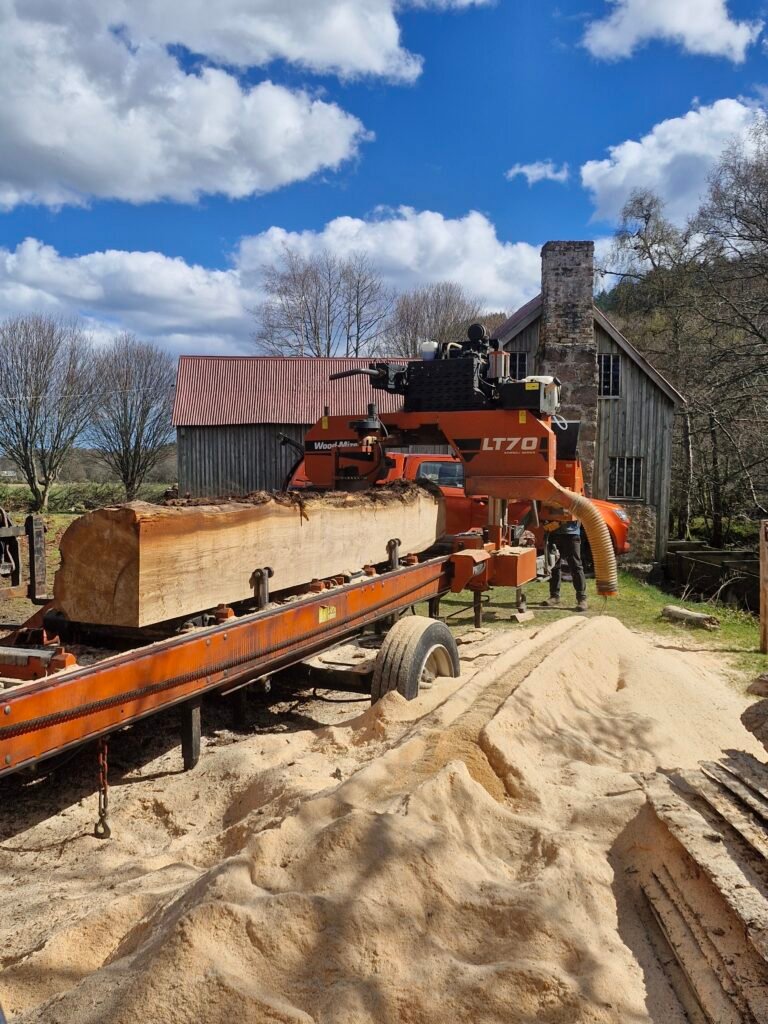
We are working to develop a core business milling timber using modern machinery. The revenue from this will be used to pay wages, these wages in turn fuelling the repair and maintenance of the historic A-listed mill buildings which are now in our care.
A historic building survey on the Bucket Mill made in 2025 concluded that the repair bill to return the mill to working order would be around £200,000. The neighbouring Sawmill & Turning Mill has a higher figure of £1.3 Million. These costings assume the conventional tender-and-contractor approach would be followed, which immediately runs into problems in North-East Scotland due to the skills shortage in conventional trades, let alone those in the specialist building crafts and building conservation sectors. We believe that by building in-house capacity and capability, we can deliver large cost-savings on these repair bills.
This is compounded by the fact that the historic trade of the Millwright, the multi-skilled “jack of all trades” is now recognised as a ‘red-list’ endangered craft, and is deemed at risk of loss in the UK. A Millwright encompasses skills in joinery, mechanical and civil engineering, hydrology and even occasional leather- and needle-work.
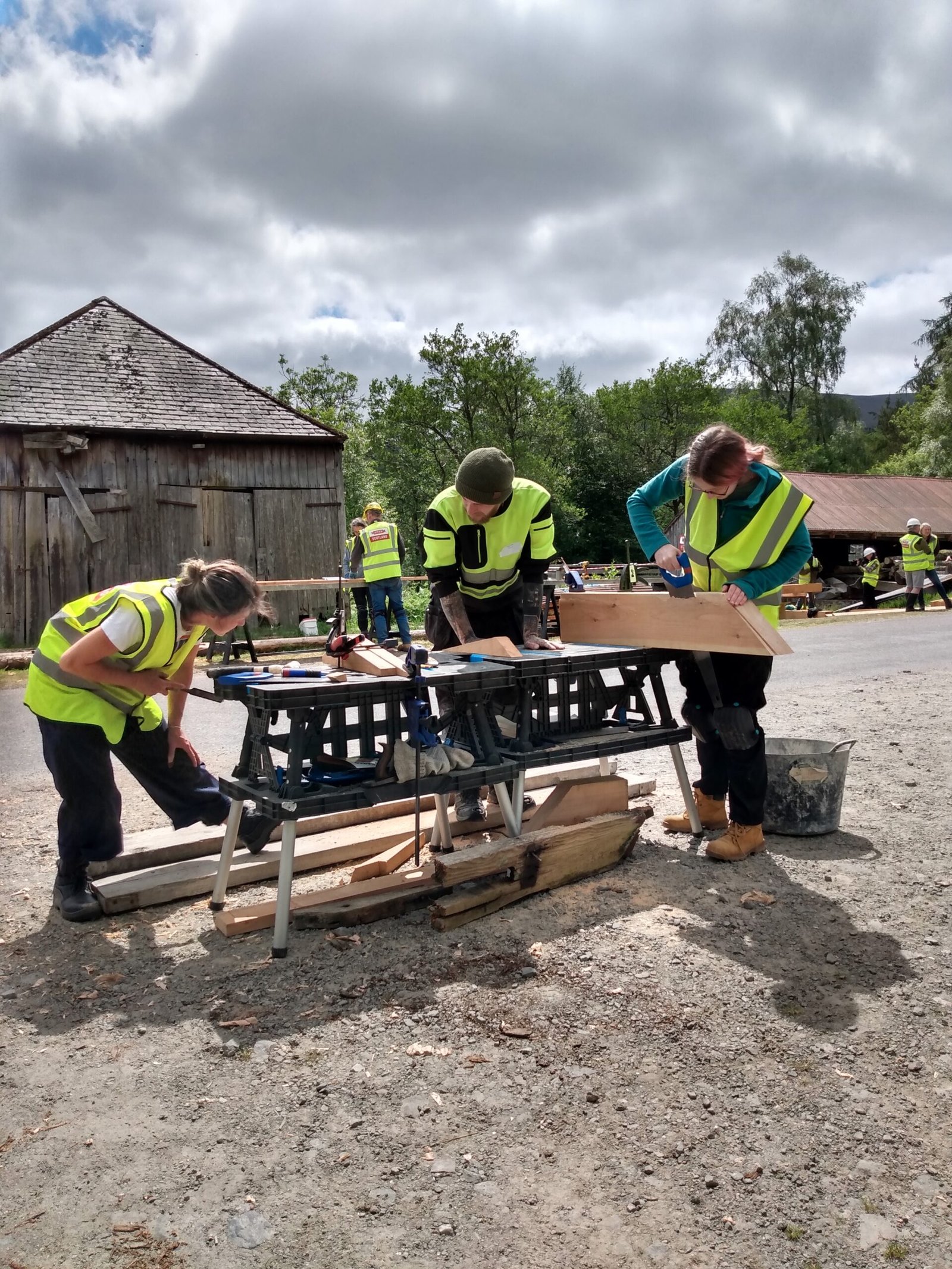
Our plan is to address skills shortages and reverse the decline of at-risk crafts by using the process of repairing the Finzean Bucket Mill to teach historic craft skills, and expose everyone involved to building conservation philosophy and methodology.
The modern element of our enterprise, the operation of a mobile sawmill, contributes to the creation of the training pathway we need to make so as to build and prove competency in order to operate the antiquated machinery in the mill. Combined with sensible interventions on historic machinery to improve health and safety, such as installing mesh guards on open drive belts, we have a clear road ahead to return the Bucket Mill to working order. Each step we take on this road, puts us in good steads to support the Birse Community Trust revive their other two historic mills.
Using the Social Enterprise Model in Rural Craft Businesses
Along with our work at the Bucket Mill, we are trying to create a repeatable model which can be used locally to support other makers. Perhaps our model can support an apprentice of our own to develop their own business at the other Finzean mills. We would be well positioned to mentor and support such an initiative, in time. On a wider regional, or even national scale, this model could be replicated to provide a structured, repeatable vehicle to rejuvenate any number of dilapidated historic buildings across Scotland.
Aberdeenshire has more historic and disused mills per capita than any other country in Britain, many represent manufacturing industries which made and produced societally useful products, from flour to linen, all using renewable water power fed by resources from their locality.
Any aspiring miller seeking to take on such premises is not likely to get far if they are a sole trader, given the high costs of repair and complexities in navigating bureaucratic systems. In our case, it has cost us in excess of £10,000 to reach of the point of starting work to repair the Bucket Mill’s weir, and many hours of unpaid work to make technical drawings, planning applications, communicate with multiple stakeholders and outsource the niche designs required to reinstate the weir with specialist contractors. Had this venture been started under a sole trader structure, it would have quickly fallen apart and left the bank balance in the red and been a depressing experience all round.
This is where the social enterprise model, embodied by our Community Interest Company Limited by Guarantee provides the framework through which we are able to acquire substantial grant funding to enable the early investment in our business. This enables us to grow without borrowing, such loans would contribute to unbearable stress and pressure to deliver. Our end goal is subject to too many external variables which are outwith our control: but our long-term lease gives us the quiet confidence to know we will get there. And we must get there, because our failure would mean the loss of skills, knowledge and historic buildings which hang on by a thread.
Establishing our CIC has required us to do some good thinking and planning about how we are going to achieve our primary goals. Communicating the how is key. Of course, our main and obvious goal is to repair the mill and make buckets (and a number of other wood products, like shingles), but for now the project is all about the journey to get to that point. Understanding how we are going to get to the point of making a bucket has led to our developing of sound strategic and business plans (aided most brilliantly by Marcus Coetzee at Community Enterprise). This in turn helps focus our minds, communicate and describe clearly to funders how their support fits into our bigger plan.
Incorporating as a CIC opens up to a huge number of doors, especially funding, that are otherwise unavailable to private individuals, no matter how good their intentions. When we are looking at navigating some complex health and safety challenges, this doesn’t just mean funding for tools or materials, but also for expert professional support, such as from the brilliant team at Arc Architects, our conservation accredited architect, or via support from a qualified health and safety consultant to help us find a way through the quagmire of legislations and solutions required to attain compliance.
This adaptation to adopt a social enterprise model is not hard as all craft businesses have inherent social good inside of them. It’s just a case of putting a name to what is already there. If anything, the structural change can reward craftsfolk for what they do already. The act of incorporation also formalises and gives confidence to supporting organisations and stakeholders. The mechanism of the ‘Asset Lock’, where a charity is nominated to receive the assets of the CIC if it was to be wound up, acts as a structural vouch.
In our case, the Birse Community Trust is our nominated ‘Asset Lock’ recipient. As they own the mill, and as our assets are a variety of tools, machines and equipment to enable maintenance and operation of the mill, if we were to fail, these assets would go to the Trust, stay with the mill and could be used again by the next miller or enterprise.
The Journey to Our First Bucket
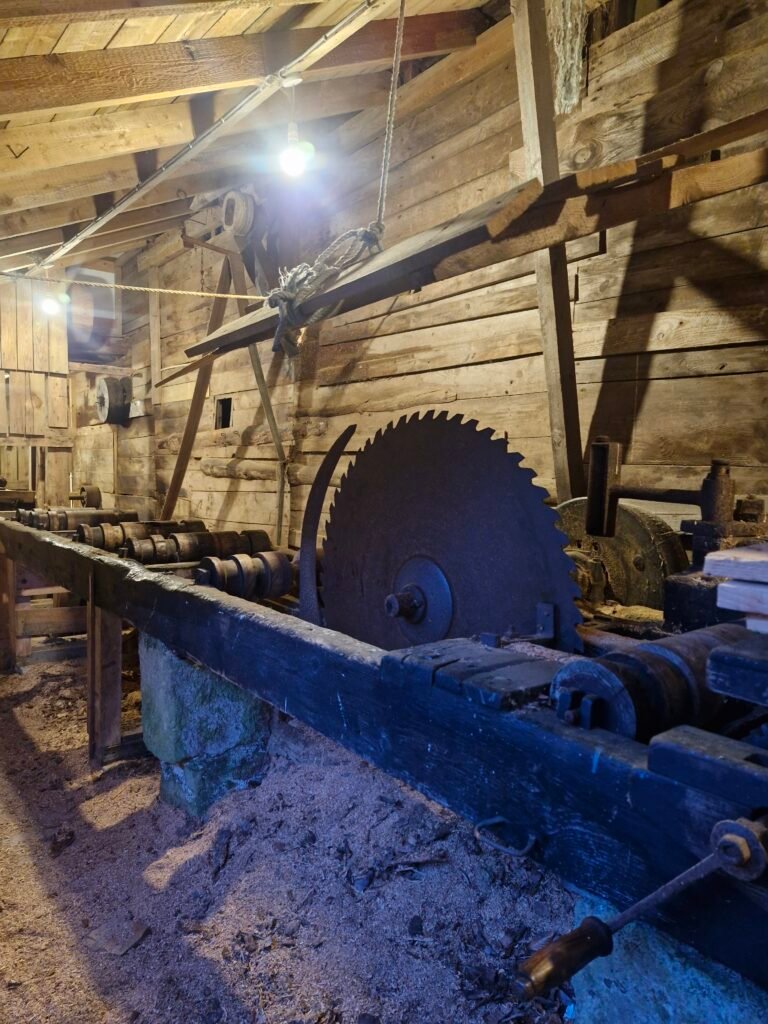
Our enterprise at the Finzean Bucket Mill has only just begun. The next few years will be a dynamic juggle between our varied areas of focus:
- Education
- Sawmilling & Wood Products
- Volunteering
- Sustainability
- Supporting Rural Craft Businesses
- Developing Contractor Capacity
- Developing Supporting Infrastructure
- Biodiversity, Ecology & Landscape
Each of these areas demonstrates just how wide reaching our project has the potential to be. Protecting and safeguarding cultural heritage will be at the heart of our project, but even the practical application of this will be incredibly varied. With the UK’s recognition of Intangible Cultural Heritage, we have also made a bid to have the Finzean Mills recognised for their ICH under the UNESCO banner, to recognise all of the rich culture they embody. By way of example, all historical Finzean millers have been renowned beekeepers, so to promote this element of cultural heritage we can expect to be developing community beekeeping initiatives alongside repairing the historic mill.
Such sub-projects will be numerous on our journey. And for now, it is really a journey. By the time we produce our first Bucket, much will have changed, hopefully all for the better.