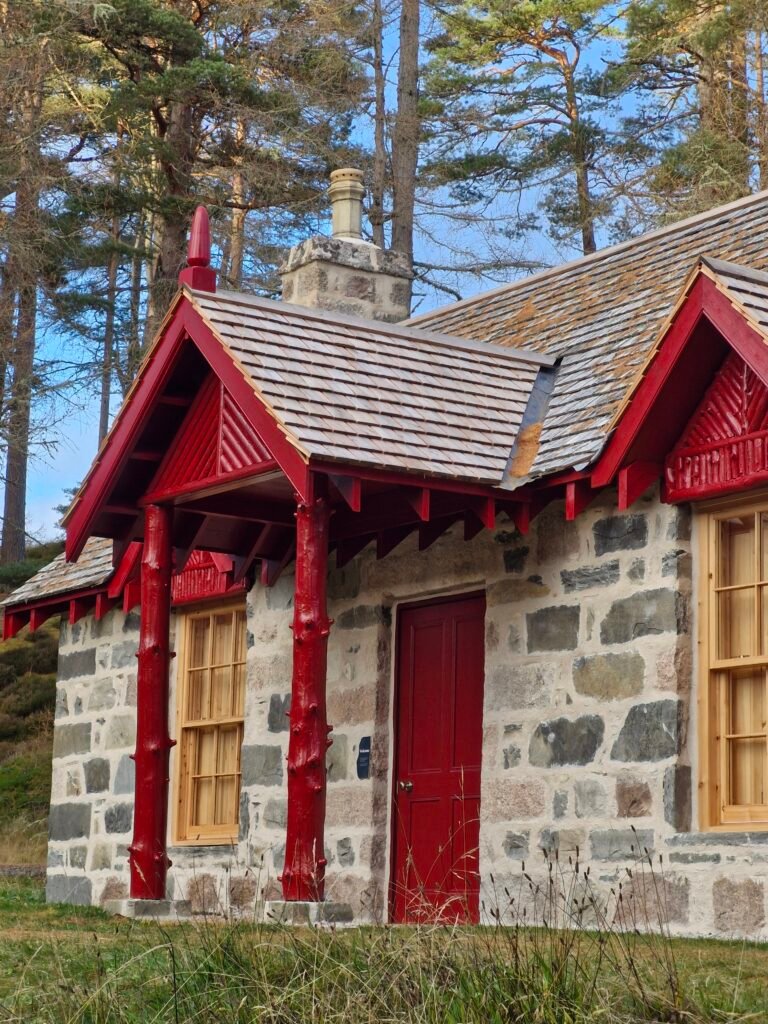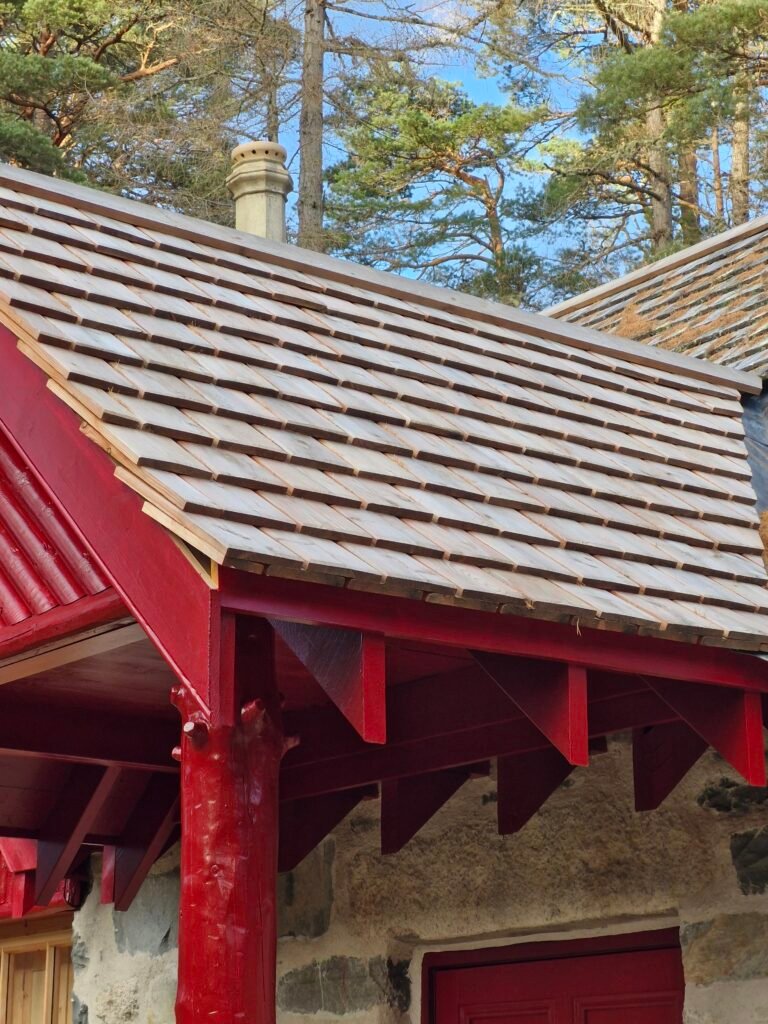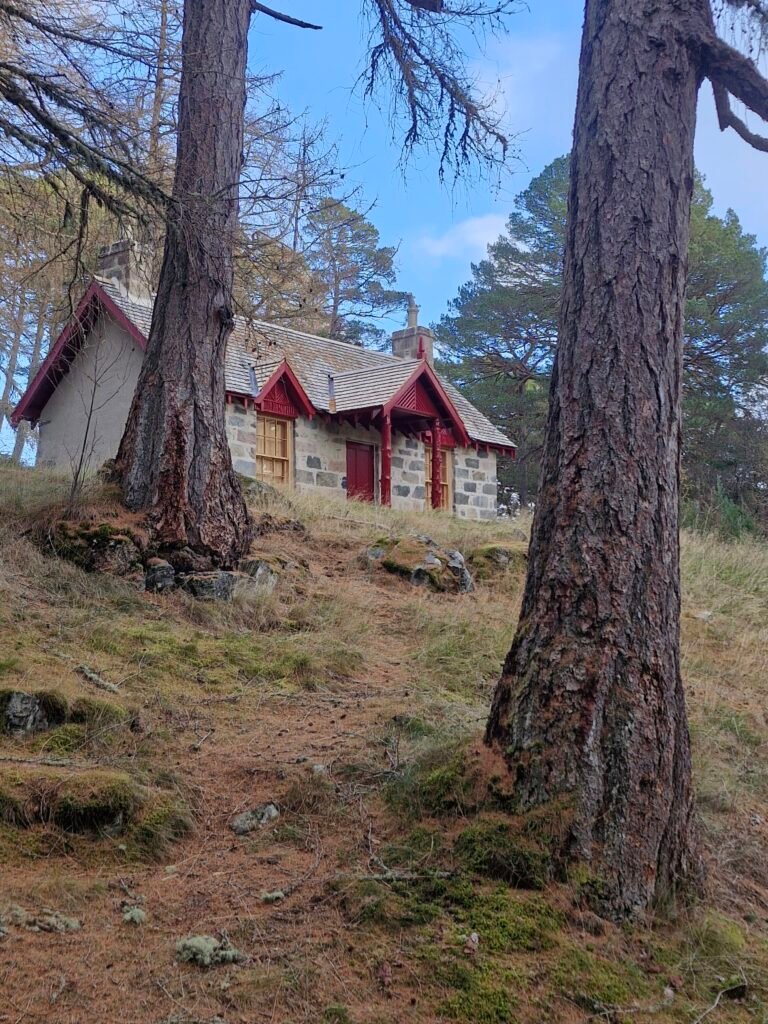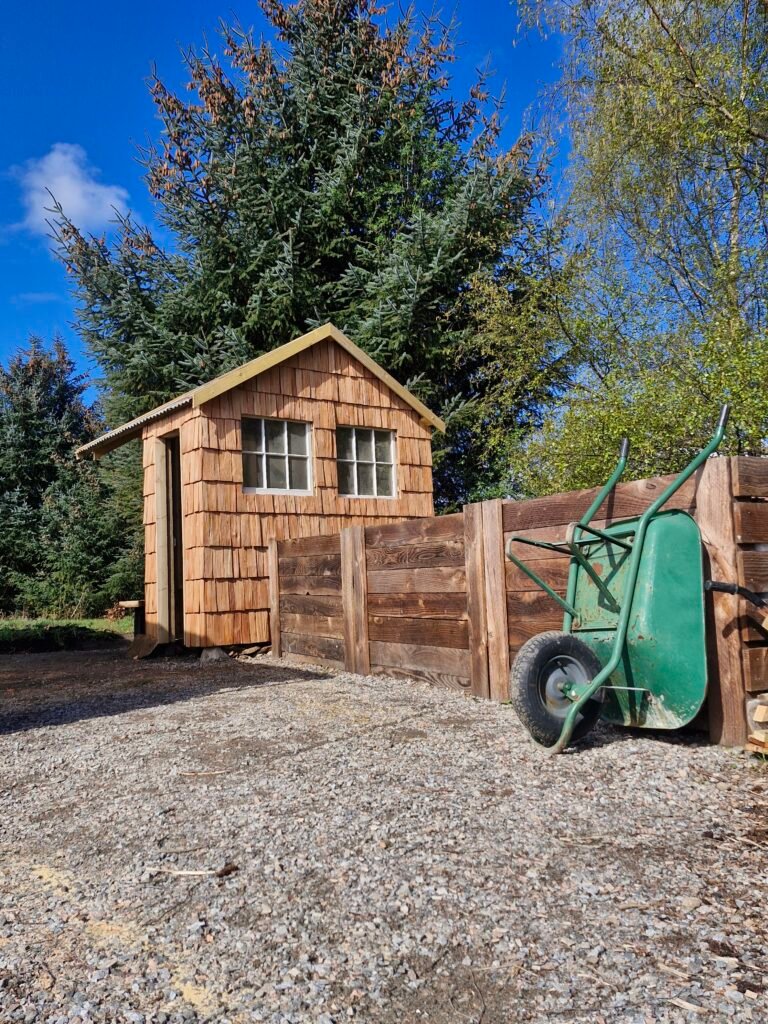

Roofing shingles have been produced in Scotland for hundreds of years but since the growth of the slate industry and changes in land use throughout the 19th Century, their use and associated tradition has reached a terminal decline and the craft has become extinct in Scotland.
However, the UK has a strong appetite for shingles, importing an average of £2.5 Million worth of material, mainly from Canada, every year. Whilst a roofing shingle is an inherently ecological product, trans-global shipping is not: real ecological products are local.
Our Managing Director Owen trained as a shingle maker in Austria in 2020, a country with a strong unbroken tradition of holzschindelmachen. In 2024 he was supported by the Churchill Fellowship to undertake extensive research across central Europe, culminanting in the report Supporting Rural Craft Businesses: A Study of European Shingle Makers. This research allowed further, intensive study of the varying European practices of shingle making, from Scandinavia to Romania, which we are applying at the Bucket Mill to revive the craft of shingle making in Scotland.
Serendipitously, there is a historical precedent of shingle manufacturing at the Finzean mills. The older ‘upper sawmill’ which stood on the Bucket Mill site before 1846 was noted as having a shingled roof – the opposite Bucket Mill cottage once had a lower roof of shingles, and archive photographs of various buildings around Finzean appear to show them as shingled. Inside the Bucket Mill there is also a rare surviving example of the original boarded roof which was replaced by the later corrugated tin.
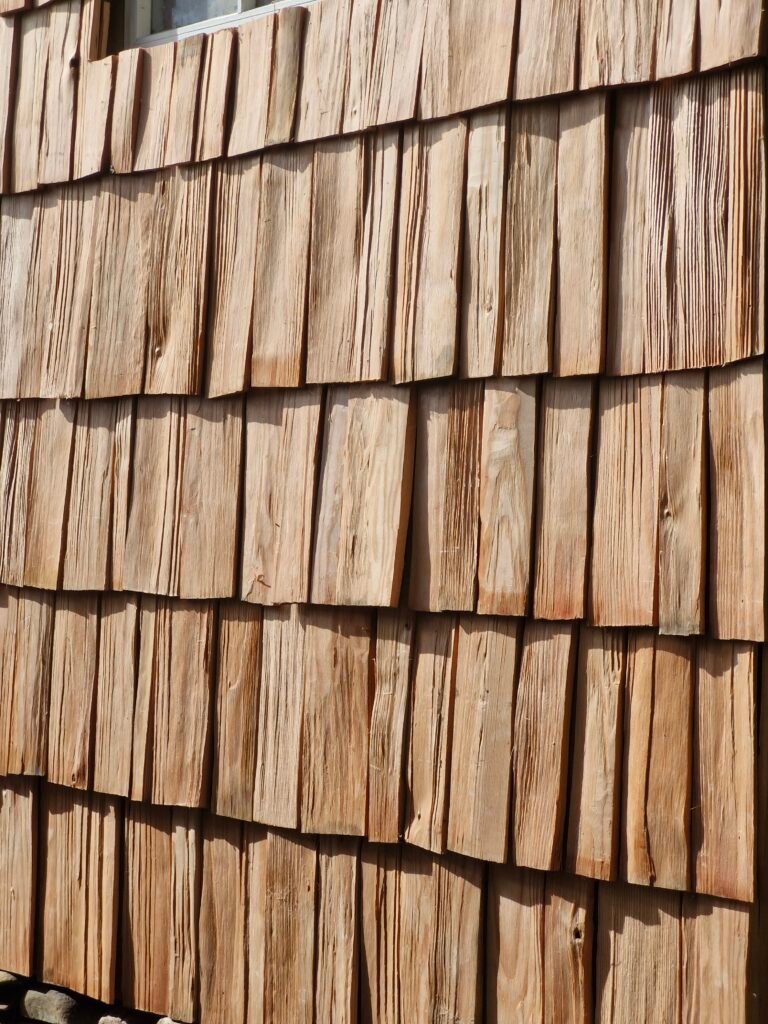
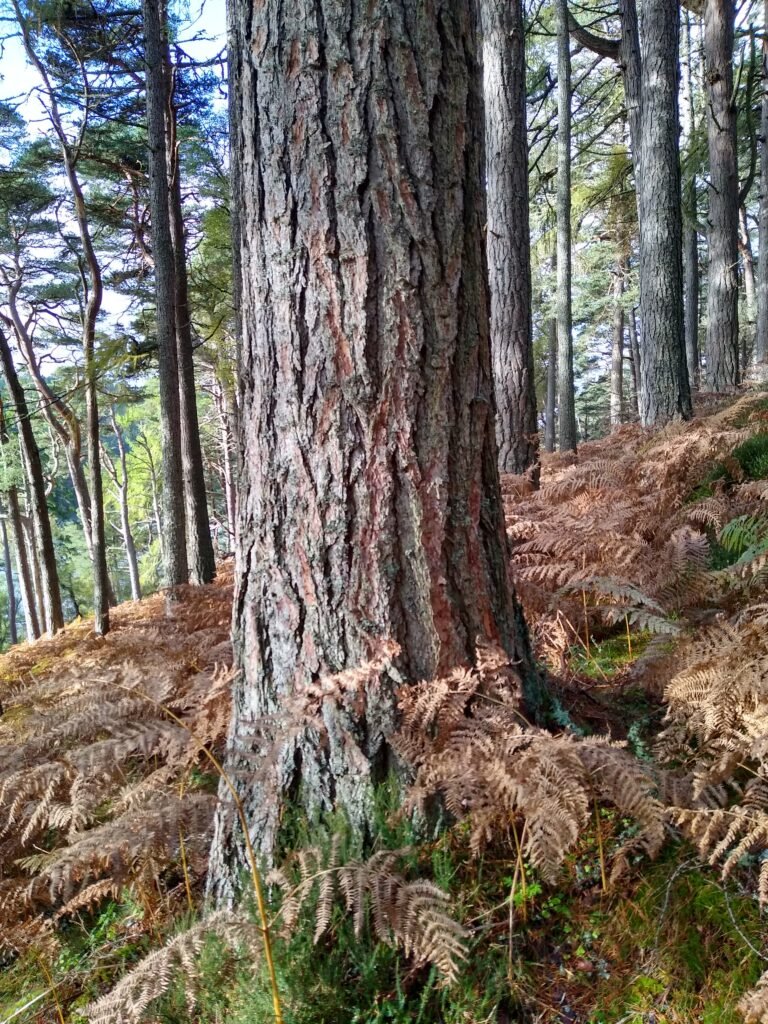
With notice, we can produce and supply roofing shingles to a variety of patterns, styles and lengths, from local, Scottish timber. We primarily produce our shingles from Larch and Scots Pine, although it is also possible to make shingles from many different species, such as Poplar or Oak. The sales of roofing shingles brings us revenue which supports our core work.
To Order
Please email enquiries@bucketmill.co.uk with your lists in the first instance. Please do not visit the mill without prior agreement.